Two meals a day. That is the standard for adult German Shepherds, and there are solid reasons behind it. Puppies need more frequent meals, and seniors sometimes benefit from small adjustments, but two daily meals is where most Shepherds land for the majority of their lives.
Getting this wrong tends to show up quickly. A Shepherd fed once a day may bolt the entire portion, raising the risk of bloat. A young puppy on only two meals may not get steady enough fuel for growth. The fix is simple: match meal frequency to life stage.
Meals Per Day by Age
| Age | Meals Per Day | Typical Spacing |
|---|---|---|
| 8–12 weeks | 4 | Every 4–5 hours |
| 3–5 months | 3 | Every 5–6 hours |
| 6–12 months | 2–3 | Every 6–8 hours |
| 1–7 years (adult) | 2 | Every 10–12 hours |
| 7+ years (senior) | 2 (sometimes 3) | Every 8–12 hours |
These are starting points. Adjust based on how your dog responds. Body condition matters more than any chart.
Puppies: Frequent, Smaller Meals
German Shepherd puppies burn through calories at a startling rate. Their bodies are building bone, muscle, and those enormous ears, all at once. Small, frequent meals keep blood sugar stable and prevent the digestive overload that comes from cramming too much into a growing stomach.
8 to 12 weeks: Four meals per day, spaced roughly every four to five hours during waking hours. A typical schedule: 7 AM, 11 AM, 3 PM, 7 PM.
3 to 5 months: Drop to three meals. The pup’s stomach can handle slightly larger portions by now. Morning, midday, and evening works well.
6 to 12 months: Most Shepherds move to two meals somewhere in this window. Some manage it at six months; others need three meals until closer to eight or nine months. If your pup seems ravenous or has energy crashes between meals, stick with three a bit longer.
For portion sizes at each stage, see our puppy feeding guide.
Adults: Why Two Meals Works
Splitting daily food into two portions keeps energy levels more consistent than one large meal. It also reduces the volume sitting in the stomach at any given time, which matters for a deep-chested breed.
Research on large breeds has linked once-daily feeding with higher risk of gastric dilatation-volvulus (GDV, commonly called bloat). The Purdue bloat study found that meal frequency, eating speed, and chest depth were all contributing factors. Two meals a day is one of the simpler things you can do to lower that risk.
A morning meal around 7–8 AM and an evening meal around 5–6 PM gives a comfortable 10-to-12-hour gap. My dog knows both times to the minute and sits by his bowl at 5:55 like clockwork. If your Shepherd is highly active, the same two-meal structure works with larger portions. No need for a third meal unless your vet recommends it.
For portion details by weight, check our adult feeding guide.
Seniors: Same Frequency, Less Volume
Most senior Shepherds, roughly seven years and older, continue doing well on two meals a day. The amounts often decrease slightly as metabolism slows, but the rhythm stays the same.
There are exceptions. A senior with a shrinking appetite may eat more willingly when meals are split into three smaller servings. Dogs managing conditions like kidney disease or diabetes sometimes need modified schedules on vet advice. If your older Shepherd starts leaving food in the bowl or seems uncomfortable after eating, talk to your vet before making changes on your own.
The Bloat Connection
Bloat is worth a few more words because the breed sits in the higher-risk category. GDV happens when the stomach fills with gas and sometimes rotates, cutting off blood flow. It can become life-threatening within hours.
Feeding frequency alone won’t prevent it, but certain habits reduce the risk according to veterinary guidance:
- Two or more meals per day instead of one
- Avoiding vigorous exercise within an hour of eating
- Not using elevated food bowls (once recommended, now linked to higher GDV incidence in some studies)
- Slowing down fast eaters with puzzle bowls or slow feeders
Free-Feeding vs. Scheduled Meals
Free-feeding, leaving a full bowl out all day, works for some breeds. Shepherds are not one of them.
Most will overeat if given unlimited access. The breed is not known for self-regulation around food. Free-feeding also makes it harder to track intake, which is the first thing a vet asks about when a dog gains or loses weight unexpectedly.
Scheduled meals have clear advantages. You know exactly how much your dog ate. You can spot appetite changes early, often the first sign of illness. Housetraining becomes more predictable because digestion follows a pattern. And mealtimes that come from you at set times reinforce calm behaviour around food.
For a full daily schedule including exercise and rest periods, see our feeding schedule guide.
Frequently Asked Questions
Can I feed my German Shepherd once a day? It is not recommended. One large meal raises the risk of bloat and causes energy spikes and crashes. Two meals is safer and more comfortable for the dog.
Should I feed at the same time every day? Yes, within reason. Aim for a consistent 30-minute window. Dogs adjust their digestion and hunger cues to routine, and predictability reduces stress and begging.
My puppy still seems hungry after every meal. Should I feed more often? Not necessarily. Puppies often act hungry regardless of how much they eat. Check that portions match the recommended amounts for your puppy’s age. If portions are correct and the pup is growing on track, the hunger act is normal.
Does feeding frequency change for a pregnant Shepherd? Yes. Pregnant and nursing dogs often need three to four smaller meals per day during the later stages of pregnancy and throughout lactation. Work with your vet on specific amounts. Calorie needs can nearly double during peak nursing.
For more on building a complete feeding plan, visit our German Shepherd food guide.
Disclaimer: This content is for general informational purposes only and is not veterinary advice. Consult a licensed veterinarian for decisions about your dog's health, diet, or medical care. Read full disclaimer →
Related Articles
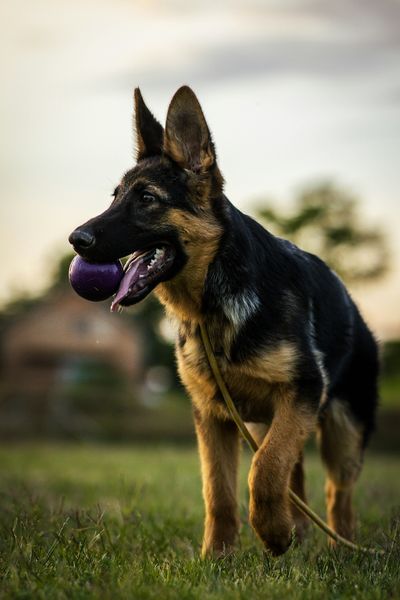
German Shepherd Feeding Schedule by Age
Complete feeding schedule for German Shepherds from puppy to senior. When to feed, how often, and how to build a routine that works.
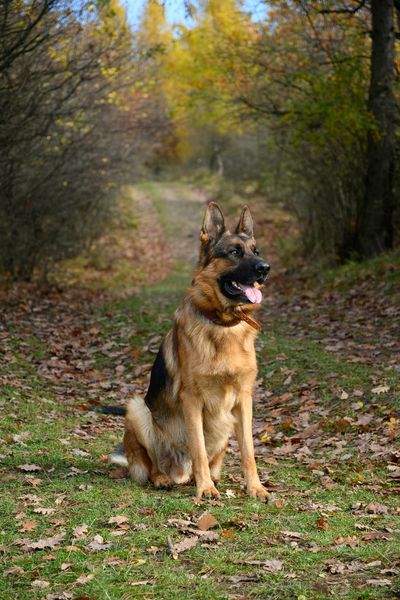
How Much to Feed an Adult German Shepherd
Daily feeding amounts for adult German Shepherds. How much food by weight, activity level, and age, with adjustment tips.
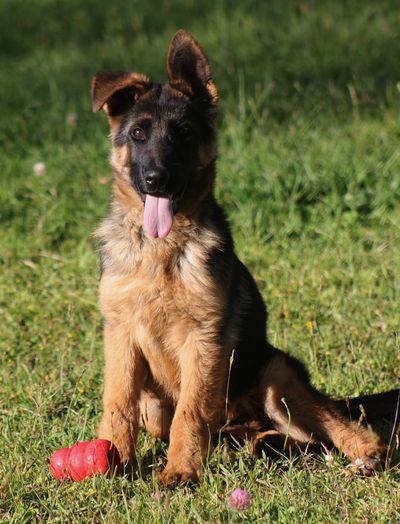
How Much to Feed a German Shepherd Puppy
Feeding amounts for German Shepherd puppies by age, from 8 weeks to 12 months. Cups per day, meal frequency, and when to adjust.