Most adult German Shepherds need between 2.5 and 4 cups of dry food per day, split across two meals. That range is wide on purpose. A 55-pound female who naps most of the afternoon has very different calorie needs than an 85-pound male who trains for Schutzhund three times a week.
The real question isn’t how many cups. It’s how many calories. Once you understand that, the rest falls into place. Our complete feeding guide pairs portion advice with specific food recommendations.
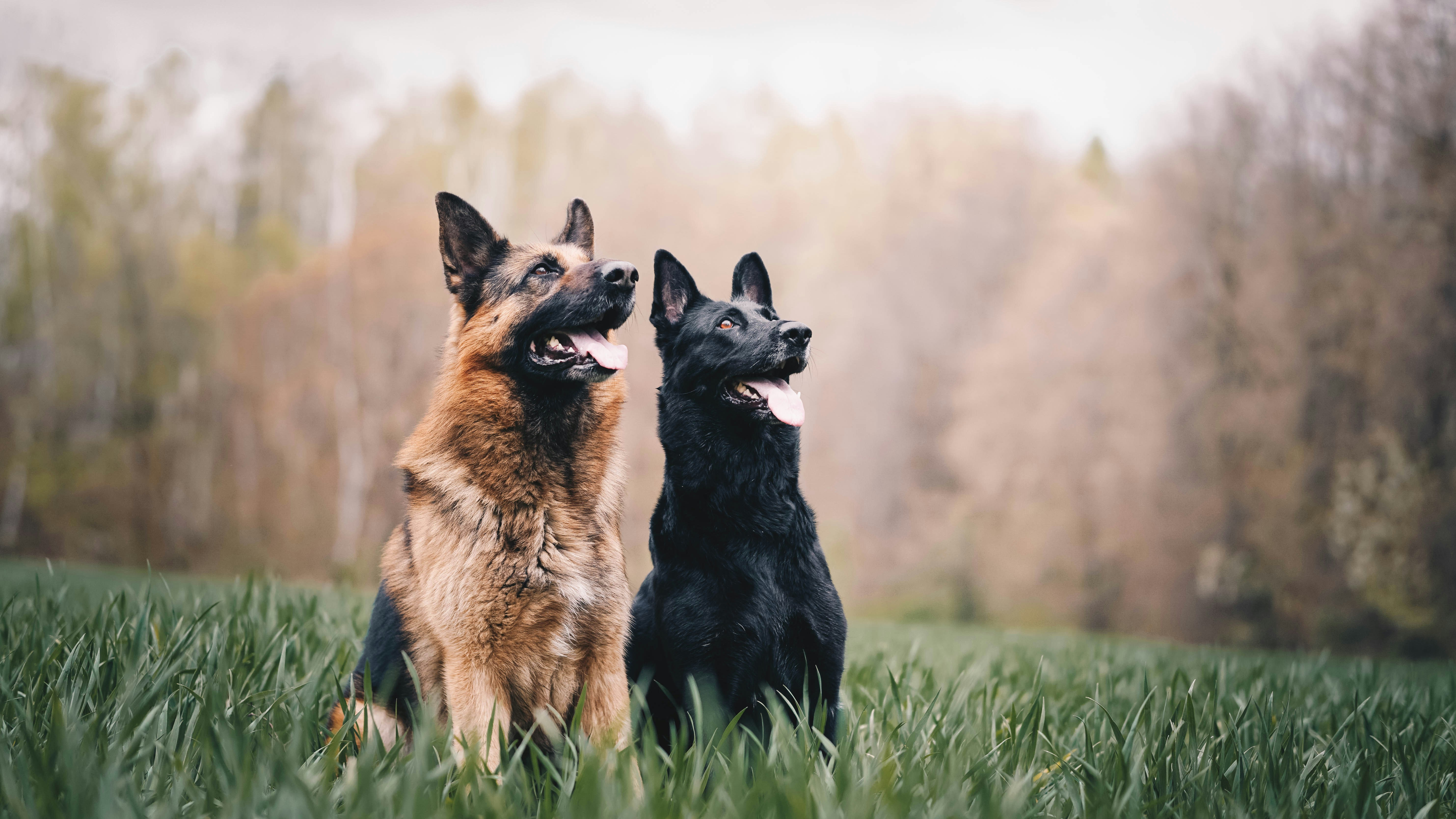
Why Calorie Density Matters More Than Cups
A “cup of kibble” is not a standard unit of energy. Depending on the brand, one cup can deliver anywhere from 321 to 463 calories. That gap makes generic feeding charts nearly useless unless you know what food you’re working with.
Here’s how four popular brands compare:
| Brand | Calories Per Cup | Cups for ~1,400 kcal/day |
|---|---|---|
| Royal Canin German Shepherd Adult | 321 kcal | 4.4 cups |
| Taste of the Wild Pacific Stream | 360 kcal | 3.9 cups |
| Purina Pro Plan Large Breed | 407 kcal | 3.4 cups |
| Orijen Original | 463 kcal | 3.0 cups |
A Shepherd eating Orijen needs roughly 30% fewer cups than one eating Royal Canin to get the same energy. Switch brands without adjusting volume and you’ll either underfeed or overfeed by hundreds of calories per day.
According to the Merck Veterinary Manual’s maintenance energy requirement (MER) calculations, a moderately active dog in the 60-to-90-pound range typically needs between 1,350 and 1,900 calories daily. Your Shepherd’s actual number depends on metabolism, activity, and whether they’ve been spayed or neutered.
Whenever you change brands, check the kcal/cup on the new bag and recalculate. This single step prevents more weight problems than any other feeding adjustment.
Starting Portions: A Practical Baseline
Using Purina Pro Plan Large Breed (407 kcal/cup) as a baseline since it’s one of the most widely fed kibbles for the breed:
| Weight Range | Cups Per Day |
|---|---|
| 51–75 lbs | 2-2/3 to 3-1/2 |
| 76–100 lbs | 3-1/2 to 4-1/4 |
Split the daily total across two meals. A 70-pound Shepherd on Pro Plan would start around 3 to 3-1/4 cups per day, roughly 1.5 cups morning and evening.
These are starting points only. Start at the lower end of the range and adjust based on what your dog’s body tells you over the next two to three weeks.
Why Bag Guidelines Run High
Nearly every dog food bag includes a feeding chart, and they’re useful as a rough starting point. But most experienced Shepherd owners find those guidelines run generous.
The AKC’s portion guidance acknowledges that manufacturer recommendations are just that: recommendations. Food companies have an incentive for you to use more product. Their charts also need to cover a wide range of breeds and body types at each weight class. A stocky, lower-energy breed at 75 pounds has very different needs than a lean, active Shepherd at the same weight.
A better approach:
- Start with the bag’s lower recommended amount for your dog’s weight.
- Feed that amount consistently for two weeks.
- Check body condition using the scoring method below.
- Adjust by about a quarter cup up or down and reassess after another week or two.
More patience than following a chart blindly. Far more accurate.
Body Condition Scoring: The Real Measure
The WSAVA Body Condition Score chart is the same tool veterinarians use worldwide. It’s a 1-to-9 scale, with 4 or 5 being ideal.
“Body condition scoring is a more reliable indicator of appropriate nutrition than following feeding guidelines on packaging, which are designed for average dogs in average conditions.”
— WSAVA Global Nutrition Committee
You can do a simplified version at home with three checks:
Rib test. Place your hands on your Shepherd’s sides and run them over the ribcage. You should feel individual ribs with light pressure, like running your fingers across the back of your hand. If you need to press firmly to find them, your dog is likely carrying extra weight. If ribs are prominent and visible, they may be underweight.
Overhead view. Stand above your dog and look down. You should see a noticeable waist, an inward curve behind the ribcage before the hips. No visible waist usually means extra weight. A very dramatic hourglass may mean too lean.
Side profile. Look for a gentle abdominal tuck. The belly should curve upward from the chest toward the hind legs. A belly that hangs level or sags suggests excess weight.
One thing to keep in mind: Shepherds are naturally lean-bodied. Many owners, and even some vets less familiar with the breed, mistake a healthy Shepherd for an underweight one. A dog in good condition will often have a visible last rib or two, a defined waist, and clear muscle definition through the hindquarters. That’s normal for the breed.
Adjusting for Activity Level
Activity is the biggest variable in how much your Shepherd actually needs.
High activity (working dogs, sport dogs, regular hikers). A Shepherd who trains, runs, or hikes for several hours a day can burn 30 to 40% more calories than a moderate-activity dog. These dogs generally need portions at the higher end of the range. Some working dogs push beyond it.
Moderate activity (two daily walks, some play). This is where most pet Shepherds land. The standard feeding chart amounts work as a starting point, adjusted by body condition scoring over time.
Low activity (recovery, couch life, senior). A quieter lifestyle means fewer calories needed than you’d expect for the dog’s size. Reducing portions by 10 to 20% is common for Shepherds in low-activity phases. If your dog is recovering from surgery or injury, your vet can provide specific guidance.
Male vs. Female Differences
Males typically weigh 65 to 90 pounds and stand taller through the chest and shoulders. Females usually fall between 50 and 70 pounds. That size difference translates directly to calorie needs.
A large male at the upper end of the weight range may need 3.5 to 4+ cups of a standard kibble. A smaller female may do perfectly well on 2.5 to 3 cups. Feed for the individual dog, not a breed average.
Spayed and neutered dogs may also have slightly lower calorie requirements than intact dogs. The difference isn’t dramatic, but watch for gradual weight creep in the months following the procedure. A modest portion reduction often helps if your Shepherd starts thickening through the midsection. Talk to your vet for guidance specific to your dog.
Common Overfeeding Signs
Overfeeding is more common than underfeeding in pet German Shepherds. Watch for:
- Ribs you can’t feel without pressing. A light touch should find them.
- No visible waist from above. The body looks like a barrel or rectangle instead of showing a taper behind the ribs.
- Belly that doesn’t tuck up from the side. A saggy or level underline is a red flag.
- Loose stool. Consistently soft stool can indicate too much food, not just a dietary sensitivity.
- Weight gain on the same portions. If nothing else has changed and the scale keeps climbing, you’re overfeeding for the dog’s current activity level.
If you notice several of these, cut back by a quarter cup per day for two weeks and reassess. Gradual adjustments are safer and easier to track than dramatic changes.
Bloat Risk and Meal Structure
German Shepherds are a deep-chested breed, which makes them more susceptible to bloat (gastric dilatation-volvulus, or GDV). This is a life-threatening emergency, and how you feed plays a role in risk.
According to the Purdue University bloat studies, several feeding-related factors may increase risk:
- Larger volume per meal is associated with increased GDV incidence
- One large meal per day carries the highest risk
- Speed of eating is a significant factor
- Raised food bowls were found to increase risk in large breeds
Two meals per day, morning and evening, remains the standard recommendation for adult Shepherds. It keeps energy levels steady and reduces per-meal volume. If your dog inhales food, a slow-feeder bowl is worth trying.
Despite older advice that still circulates, feeding from a bowl on the floor is the safer choice for deep-chested breeds based on available research.
What Feeding Actually Costs Per Month
Knowing how much to feed lets you estimate real monthly costs. Here’s what two popular brands run on Chewy at the time of writing (prices may vary):
| Brand | Bag Price (Chewy) | Bag Size | Approx. Cups Per Bag | Cost Per Month (~3.5 cups/day) |
|---|---|---|---|---|
| Purina Pro Plan Large Breed | ~$75 | 34 lbs | ~136 cups | ~$28/month |
| Royal Canin German Shepherd Adult | ~$100 | 30 lbs | ~120 cups | ~$35/month |
Royal Canin costs more per bag and delivers fewer calories per cup (321 vs. 407), so you go through it faster. A Shepherd on Royal Canin may need closer to 4+ cups per day to match the calories in 3.5 cups of Pro Plan, which pushes the monthly cost even higher.
For a full breakdown of food costs and other monthly expenses, see our German Shepherd cost per month guide.
Frequently Asked Questions
How many cups of food should I feed my German Shepherd per day?
Most adults eat between 2.5 and 4.25 cups of dry food per day, split into two meals. The exact amount depends on your dog’s weight, activity level, and the calorie content of the food. On Purina Pro Plan (407 kcal/cup), a 51-75 pound Shepherd needs 2-2/3 to 3-1/2 cups. On a lower-calorie food like Royal Canin (321 kcal/cup), you’d need more cups to deliver the same energy.
Should I feed based on current weight or ideal weight?
Feed based on the weight you want your Shepherd to be, not necessarily where they are now. If your dog is overweight, feeding for their current weight maintains the problem. Your vet can help determine a realistic target weight and a safe rate of loss, typically no more than 1 to 2 percent of body weight per week.
Why does my German Shepherd always act hungry?
Many Shepherds are food-motivated and will happily eat beyond what they need. Acting hungry isn’t always a sign of underfed. Check body condition first. If your dog is at a healthy weight with good energy, they’re getting enough. Persistent or unusual hunger can occasionally signal a health issue, so mention it at your next vet visit if it’s a new behavior.
Is it okay to mix wet food with kibble?
Yes. Many owners add a small amount of wet food for moisture and flavor. Just account for the extra calories. A typical can adds 200 to 400 calories. Reduce the kibble portion to keep total daily intake on target.
Disclaimer: This content is for general informational purposes only and is not veterinary advice. Consult a licensed veterinarian for decisions about your dog's health, diet, or medical care. Read full disclaimer →
Related Articles
How Much Does a German Shepherd Cost Per Month
Monthly cost breakdown for owning a German Shepherd. Food, insurance, vet, grooming, and extras — with real estimates and ways to save.
German Shepherd Feeding Schedule by Age
Complete feeding schedule for German Shepherds from puppy to senior. When to feed, how often, and how to build a routine that works.
How Much to Feed a German Shepherd Puppy
Feeding amounts for German Shepherd puppies by age, from 8 weeks to 12 months. Cups per day, meal frequency, and when to adjust.